
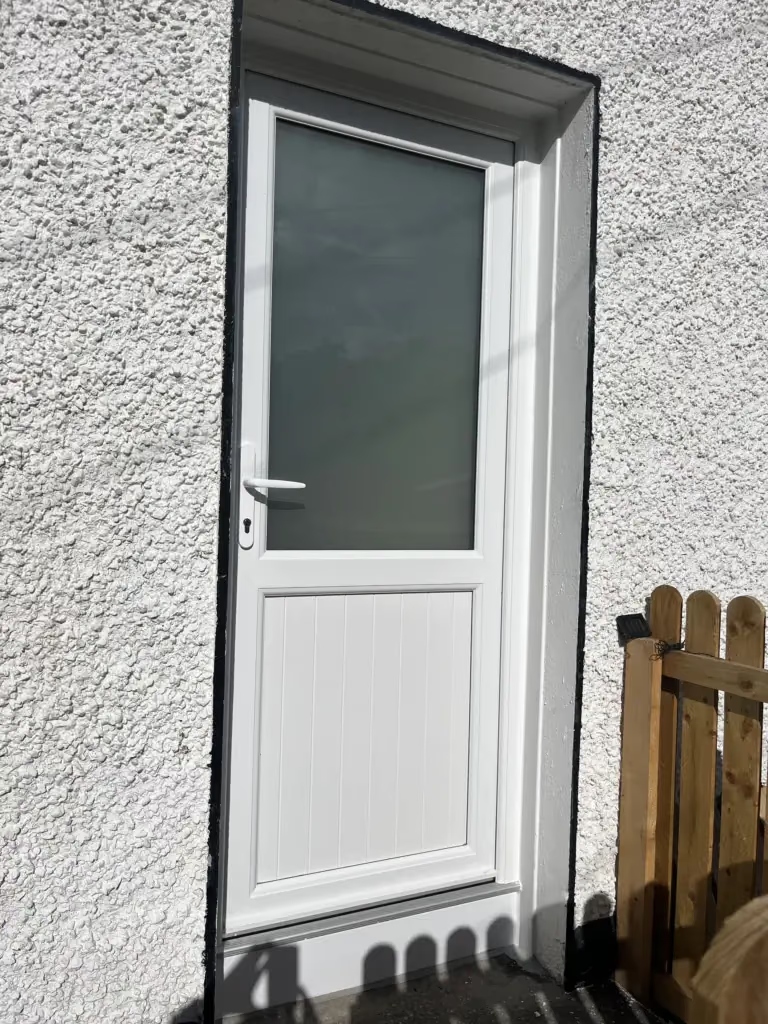
We spend a lot of time deciding the colour and style of our front doors, but the back door rarely gets the same attention — even though it is statistically the more vulnerable entry point in an Irish home. After fitting back doors in over 1,800 Dublin, Kildare and Wicklow homes since 2003, here are the five back door types you will actually see specified in 2026, with real prices, security trade-offs and the situations each one suits.
Quick orientation: for a standard utility-to-garden back door on a Dublin semi-detached, a uPVC single door at €1,170 – €1,400 + VAT is the right answer for the vast majority of homes. The remaining options are about specific use-cases (light, width, accessibility, kitchen-to-garden), not about being "better".
Why Back Door Security Matters More Than You Think
Rear gardens are not overlooked, side passages are often unlit, and many older Irish back doors still rely on a single Yale-style nightlatch and no multi-point engagement. Every back door we install now ships with the following as standard:
- Multi-point locking (minimum 3-point, typically 5-point) engaging the frame top, bottom and centre
- Anti-snap euro cylinder rated TS 007 3-star — defeats the most common burglary technique used in Ireland
- Laminated glass (not just toughened) on any glazed section — does not shatter into accessible shards
- Reinforced hinges with anti-jemmy bolts
- PAS 24 certification — the relevant UK/Irish security standard for residential doors
1. uPVC Single Back Door
The default choice in roughly 70% of Dublin installs. A 28 mm chambered uPVC slab with steel reinforcement, half-pane or full-pane laminated glass, multi-point lock, fitted into a uPVC frame. Maintenance-free, A-rated thermal performance, and qualifies for the SEAI grant.
- Typical fitted cost: €1,170 – €1,400 + VAT
- Lifespan: 20–25 years
- Security: 10-point hook-bolt locking + anti-snap TS 007 thumb-turn cylinder — the same spec we fit on front doors
- Best for: Utility-to-garden, kitchen back doors where kerb appeal is not the priority
For the front-of-house comparison, see our uPVC vs composite doors guide.
2. Composite Back Door
A 44 mm solid timber-core slab with a glass-reinforced plastic (GRP) skin and high-density foam insulation. Better security, better insulation, longer lifespan than uPVC — but roughly double the cost. Worth it for homes where the back door is visible from the street, used heavily, or where a matching composite front door is being installed at the same time.
- Typical fitted cost: €1,800 – €2,400 + VAT
- Lifespan: 35+ years
- Security: PAS 24 certified slab — 6x stronger than timber, anti-drill cylinder, 10-point hook bolts. The strongest option on this list
- Best for: High-traffic rear doors, heritage homes, owner-occupiers planning to stay 10+ years
3. French Doors (Pair)
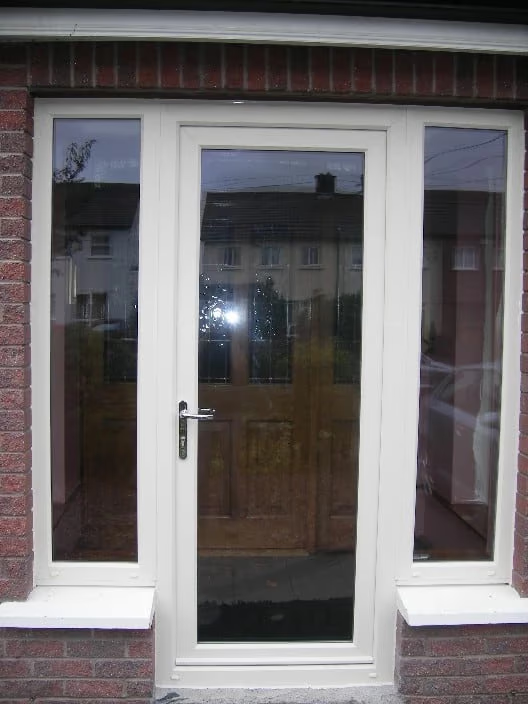
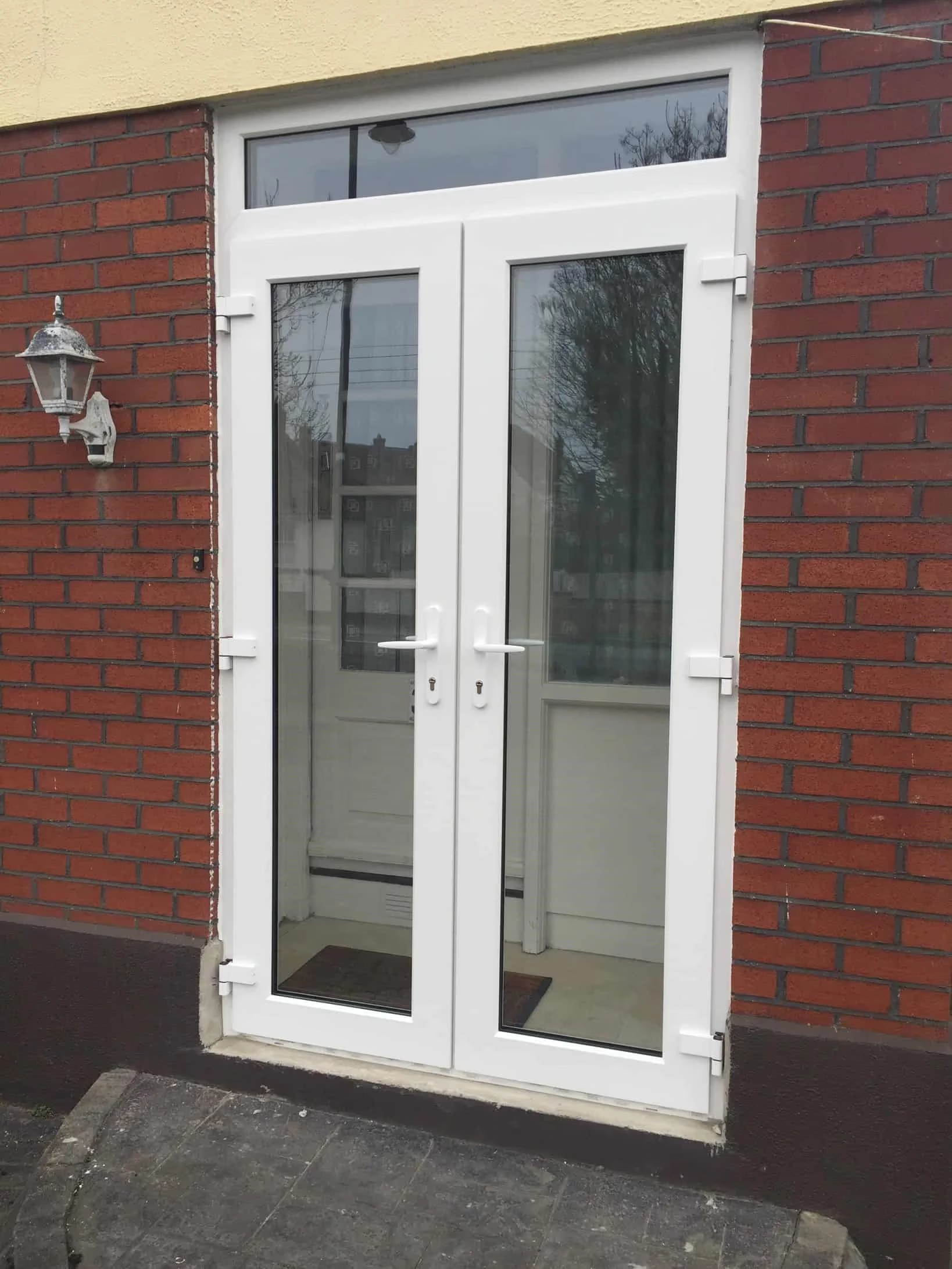
Two outward-opening leaves hinged at the outer jambs — the classic kitchen-to-garden upgrade. Maximum natural light, maximum opening width when both leaves are released, and a much warmer kerb impression than a single door + window combination. Needs a structural opening of at least 1,500 mm.
- Typical fitted cost: €2,400 – €3,200 + VAT
- Lifespan: 20–25 years (uPVC frame)
- Security: 10-point hook-bolt lock on the master leaf + top/bottom shoot-bolts on the slave leaf; laminated glass recommended
- Best for: Kitchen-to-patio upgrades, extension projects, garden-facing home offices
See our French doors page for full specifications, or our 7-point French door buying guide for what to look for before signing a quote.
4. Sliding Patio Door
Two or three large glazed panels that slide horizontally on a track. No internal swing clearance required — ideal where furniture or a kitchen island sits right up against the opening. Modern uPVC sliders match French doors on thermal performance and security (laminated glass, multi-point hooks), but the sightlines are bigger and the fitted cost is higher.
- Typical fitted cost: €2,800 – €4,500 + VAT (uPVC) or €4,000 – €11,500 + VAT (aluminium lift-and-slide)
- Lifespan: 25+ years
- Security: Multi-point hook lock + anti-lift blocks on the track; specify laminated glass at ground floor
- Best for: Wide openings (2 m+), kitchen-living extensions, no-swing-clearance situations
Full detail on our sliding patio doors page.
5. Dutch (Stable) Door
Split horizontally so the upper and lower halves operate independently. The lower half stays closed; the upper half opens for ventilation, a view, or to talk to someone outside without unlocking the full door. Niche but loved by the homeowners who specify them — particularly families with small children or dogs, or rural homes where ventilation through summer matters.
- Typical fitted cost: €2,200 – €2,800 + VAT
- Lifespan: 25+ years
- Security: Independent multi-point locks on top and bottom halves + interlocking centre bolt
- Best for: Rural homes, period properties, families with pets or young children
SEAI Grant Eligibility (2026)
Back doors that achieve a U-value of 1.4 W/m²K or better qualify for the SEAI Better Energy Homes door grant — currently up to €800 per door. Most modern uPVC single back doors, composite doors, and French or sliding pairs meet this threshold as standard. We are an SEAI-registered installer, so eligible upgrades qualify directly — homeowners apply to SEAI with our contractor reference and post-works BER. See our SEAI grant page for the full process.
The Bottom Line
For 70% of Dublin homes, a uPVC single back door at €1,170–€1,400 + VAT with multi-point locking and laminated glass is exactly the right answer. Move up to composite if the door is street-visible or you are matching a composite front door. Choose French or sliding only if you are opening the back of the house structurally and the door becomes a feature rather than a utility.
Free home survey, written fixed-price quote within 24 hours, and full SEAI grant guidance built in. Call 01 822 8982 or request a free survey. For fitted prices, colours and install day detail, see our back doors Dublin page; planning the whole house? Our door buying guide covers every door in the home.