
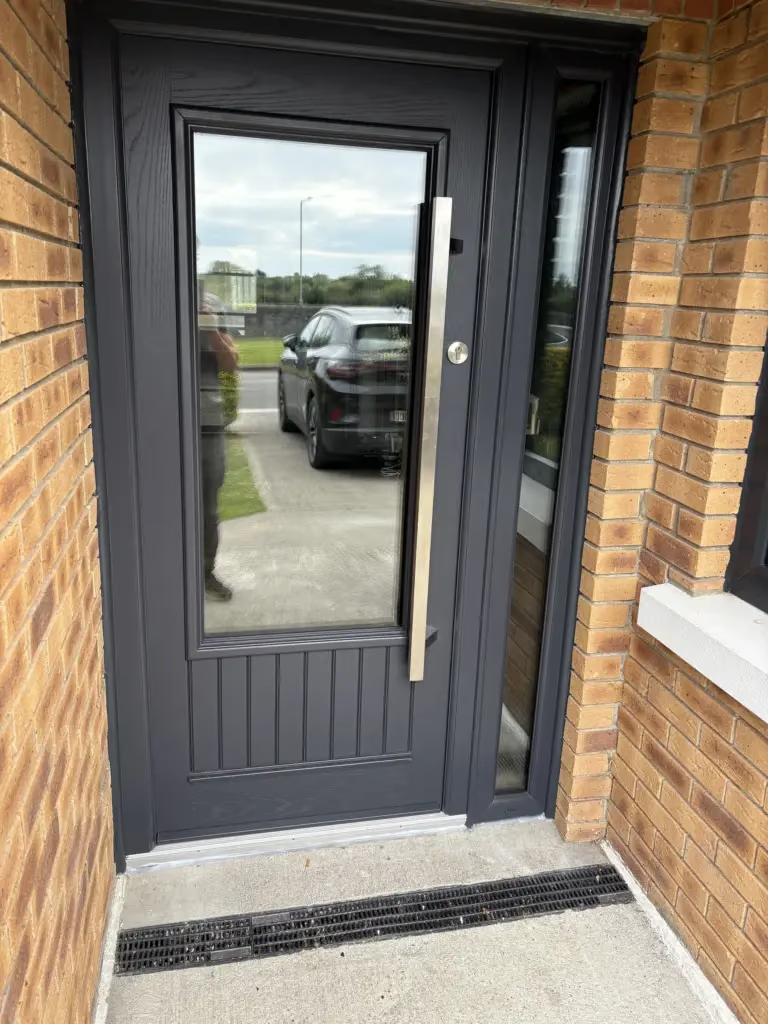
If you are replacing a front or back door in Dublin, Kildare or Wicklow, you have two real choices in 2026: uPVC or composite. Every other option (timber, aluminium, steel) is either much pricier, much higher maintenance, or both. This page is the straight answer from a family-run installer with 23 years on the ground in Ireland and 5,247 doors fitted: which one wins, when, and why — backed by real Irish pricing, real U-values, and the SEAI grant numbers as they actually apply in 2026.
Short answer up front: for a front door, choose composite — it is more secure, more thermally efficient, lasts 35+ years, and the SEAI grant covers up to €800 per door. For a back door, side door, or rental property, uPVC is genuinely good value at roughly half the price. Browse our full front doors Dublin range for fitted prices, colours and lead times. Now here is the detail you need before you commit either way.
Side-by-Side Comparison Table
| Feature | uPVC Door | Composite Door |
|---|---|---|
| Build / Core | 28mm hollow uPVC chamber, steel reinforced | 44mm solid timber core + GRP skin + insulating foam |
| U-Value (thermal) | 1.4-1.6 W/m²K | 1.0-1.2 W/m²K (≈30% better) |
| Security | PAS 24, multi-point lock, hollow slab | PAS 24, multi-point lock, solid 44mm slab — Police Approved |
| Typical Lifespan | 20-25 years | 35+ years |
| Price (supplied + fitted) | €900-€1,200 + VAT | €1,800-€2,400 + VAT |
| SEAI Grant | Eligible if A-rated (rare) | Eligible — up to €1,800 |
| Colour Options | 12 foiled finishes, may fade south-facing | 20+ standard + custom RAL, colour-fast |
| Kerb Appeal | Functional, plastic appearance | Premium, looks like timber |
| Best For | Back doors, rentals, side passages | Front doors, owner-occupied, kerb-appeal homes |
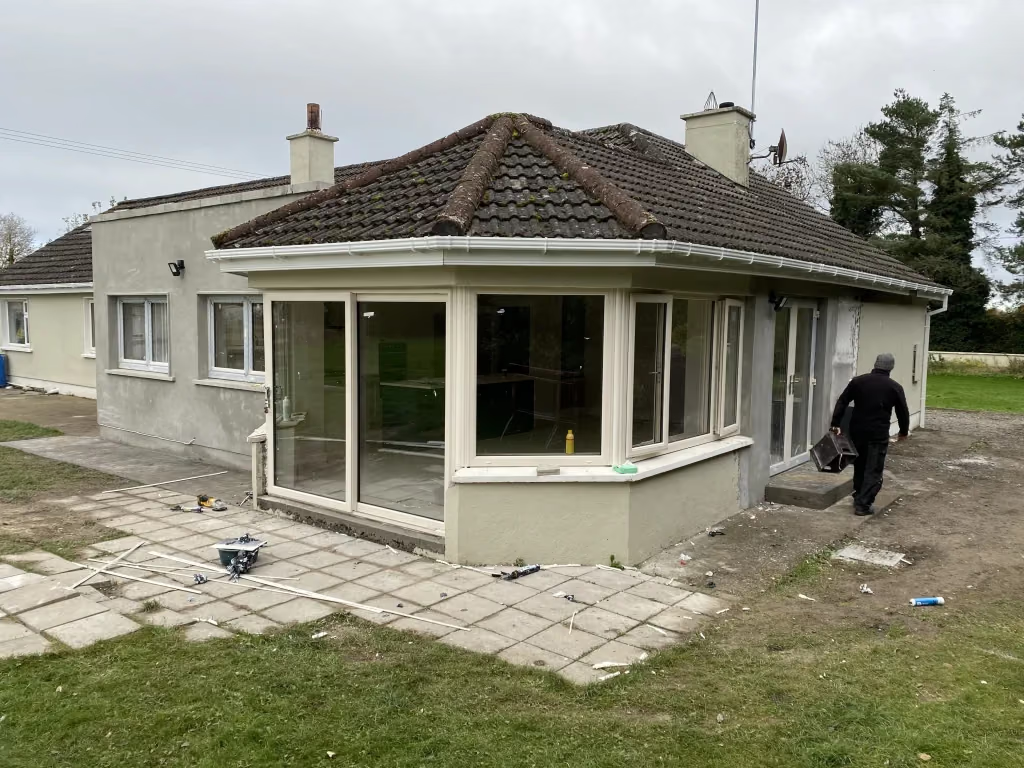
uPVC Doors Explained
A uPVC door is constructed from extruded unplasticised polyvinyl chloride profiles welded into a hollow, multi-chambered slab. Inside that slab are galvanised steel reinforcements that stop the door warping or sagging. The chambers themselves trap air, which provides the door's thermal performance. Modern Irish-spec uPVC doors hit a U-value of around 1.4 W/m²K — meeting the minimum Building Regulations Part L threshold but rarely beating it.
Pros of uPVC
- Lowest installed cost — typically €900-€1,200 + VAT for a standard back door
- Zero maintenance — wipe down twice a year
- Multi-point locking and PAS 24 security as standard
- Decent thermal efficiency (U-value 1.4-1.6 W/m²K)
- Available in white, black, anthracite, and 12+ foiled wood-grain effects
Cons of uPVC
- Hollow slab — easier to defeat than a solid composite door
- Foiled colours can fade or chalk after 8-10 years on south-facing elevations
- Plastic appearance — looks every bit a budget door from the kerb
- Shorter total lifespan (20-25 years) versus composite
- Often falls outside SEAI grant thresholds unless specifically A-rated
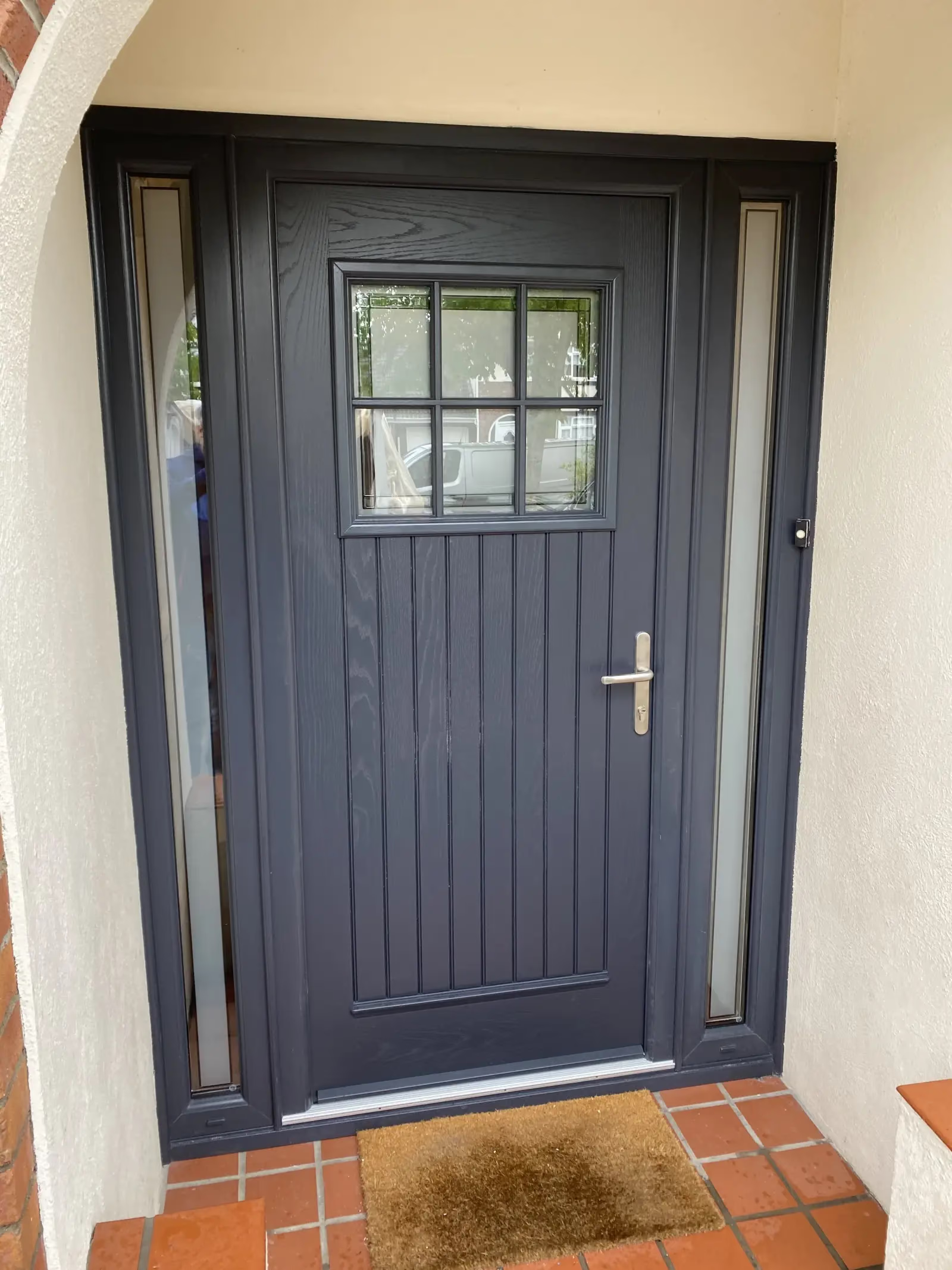
Composite Doors Explained
A composite door bonds five materials into a single 44mm slab: a solid laminated timber core, high-density polyurethane insulation foam, a galvanised steel reinforcement, a glass-reinforced plastic (GRP) outer skin, and a bonded colour layer that does not fade. The GRP skin is what gives composite doors their realistic timber grain — it is moulded directly from a real timber panel and pigmented through the full skin thickness. That is also why a composite door from 2026 still looks the same in 2046.
Pros of Composite
- Solid 44mm slab — substantially harder to defeat than uPVC
- U-value 1.0-1.2 W/m²K — roughly 30% better thermal performance
- SEAI Better Energy Homes grant up to €800 per door
- 35+ year lifespan with 10-year colour-fade guarantee
- 20+ standard colours plus custom RAL — looks like premium timber
- Police-Approved Secured by Design lockset on most models
Cons of Composite
- Roughly double the price of uPVC — €1,800-€2,400 + VAT installed
- Heavier — needs proper hinge spec on tall openings
- Custom RAL colours add €150-€250 and 1-2 weeks lead time
Decision Matrix: Which Door Should You Choose?
Choose composite if…
- It is your front door — kerb appeal and security matter most here
- You plan to live in the house for 10+ more years
- You want to claim the SEAI grant (€800 per door reduces the net cost)
- You are insulating walls or attic at the same time — keep U-values consistent
- Insurance or peace of mind around forced entry is a concern
Choose uPVC if…
- It is a back door, side door, or door from utility room to garden
- It is a rental property and you are optimising for cost-per-year
- Your front door is hidden behind a porch and not part of the kerb view
- Budget caps at €1,200 + VAT and SEAI grant is not in scope
- You are happy with white, black or anthracite without custom colours
Real Pricing in Ireland — 2026
Pricing below is supplied-and-fitted in Dublin, Kildare and Wicklow. Includes removal of the old door, full make-good of the surround, multi-point lock, and a 10-year guarantee. VAT is shown separately so you can compare like-for-like with other quotes.
- uPVC back door (white): from €900 + VAT
- uPVC front door (anthracite or black): from €1,100 + VAT
- Composite front door (standard colour): from €1,800 + VAT
- Composite front door with side panel: from €2,200 + VAT
- Composite door custom RAL upgrade: +€150-€250
- SEAI grant on A-rated composite: up to −€800 per door
What a Composite Door Quote Actually Contains — Line by Line
The cost of a composite door confuses people because quotes bundle everything into one figure. Here is a typical €2,300 + VAT Palladio door + side-screen install we fitted in Knocklyon this year, broken down the way our written quotes itemise it:
- Door slab (Palladio, standard colour): ~€1,150
- Glazed side-screen, triple-glazed satin glass: ~€520
- Frame, cill, trims, expanding foam, sealants: ~€180
- Hardware: PAS 24 multi-point lock, anti-snap 3-star cylinder, handle, letterbox, knocker: ~€160
- Installation (one day), old door removal, make-good, disposal: ~€290
What moves the number up or down: custom RAL colours (+€150-€250), dual colour (+€100-€180), upgraded decorative glass (+€80-€300 depending on the design), long-bar pull handles (+€60-€120), and non-standard openings that need structural work. What should never appear as an extra: the survey, the written quote, the multi-point lock, or disposal of the old door. If another quote hides those in small print, compare carefully against our composite doors Dublin pricing and our uPVC doors range.
The Bottom Line — Our Honest Recommendation
If we were specifying doors for our own house in Dublin tomorrow, this is exactly what we would do: composite for the front door (claim the €800 SEAI grant, lock in 35-year peace of mind), uPVC for the back door (saves around €900-€1,200 versus a second composite). That is the spec we install on roughly 70% of our jobs across Dublin, Kildare and Wicklow — and it is the spec we would recommend to any honest neighbour.
Family-owned since 2003. 23 years installing doors and windows across Ireland. 5,247 homes completed. SEAI-registered. Fully insured on every job. Owen responds within 24 hours and books free surveys for the earliest available appointment — call 01 822 8982 or use the form below.